37.6K
Downloads
413
Episodes
The study of the Bible in its historical context - with a focus on the archaeology, history, geography, customs , culture, and even the languages of the ancient Middle East. WE ask what did they understand THEN - the original intent of the Lord - so that we can expand and enrich our understanding NOW and thus become true disciples of Adonai Yeshua as in John 8:31-32.
Episodes
26 minutes ago
26 minutes ago
39 min

What an amazing event we are studying; Moses meets Eloheem, our God, the God of Abraham and the God of Isaac and the God of Jacob at the location of the burning bush on the "Mountain of God" in the Sinai region. In this podcast we have two major things we will focus on in Exod. 3:9-17. The first is the uncanny connection between Moses and the Messiah. Moses is called the First Redeemer among some rabbinic scholars and the coming Messiah is called the Ultimate Redeemer. As Moses was chosen we read that Jesus, the Messiah (in English from the Greek, the Christ), is the chosen of God in Luke 9:35. As Moses was sent, the Messiah too, Jesus, was sent as we read in John 20:21. Is there more? And, are we somehow involved? Does this relate to us?
Consider, Israel was a born again people in the New Covenant at Sinai, the mountain of God, and we, Jew and Gentile, who proclaim Jesus as Lord and Savior, are born again and are part of the New Covenant established at Jerusalem, the mountain of God, as in Isa. 2:1-3 or 66:20. Wait a minute that's us! Is there more? You bet.
The second major focus is that for the first time, God makes His own personal name ( יהוה Yahvay) known. But, recall, one purpose of this study is to hear Jesus' words as He said them between 24-30 A.D. when all they had was the Hebrew Scriptures (a.k.a. the Old Testament - I don't like using that. They are not OLD). We hear Him say in John 5:39 that all scripture testifies of Him. Their main Bible books then were the Torah תּוֹרָה, the first five books of the Bible; Genesis, Exodus, Leviticus, Numbers, and Deuteronomy. Thus, one purpose in this study is to "see" Jesus in the Torah תּוֹרָה! And, you guys, WOW, does the Torah ever tell us of the Ultimate Redeemer and the Gospel of the Kingdom. That's why I call the Torah podcast series THE GOSPEL ACCORDING TO MOSES. Wait till you see how the giving of God's name ( יהוה Yahvay) in the first Passover season to Moses at the mountain of God (Exod. 3:1) is related to Jesus during the Last Supper in the Passover season as the mountain of God (Isa. 2:1-3).
In this podcast I said I would provide two links to two articles on how mistaken many Gentiles and Jews are today in trying to pronounce God's personal name - יהוה Yahvay. Notice I pronounce it Yahvay and not Yahway. For one reason there is no "W" sound in Hebrew. I have other reasons as well but this is "one hill I will not die on." If you say it is pronounced Yahweh or another way, I respect your view, I disagree, but to me this is not worth the argument. I rely on solid scholars, proven to me over time, that the pronunciation of His name is probably lost forever until Messiah returns. But, there are many who claim that His name is pronounced YEH HOE SHOO AH. So, here's the links to two articles explaining how God's name with no vowel marks (יהוה)and God's name with vowel marks ( יְהוָה ) leads to this error. The vowel marks were put there to tell readers NOT to pronounce the name with the marks but to substitute the word Adonai (אֲדֹנָי -same vowel marks).
The first article is found at the website for the Jerusalem School of the Synoptic Gospels. You may need to JOIN the school to access the 100's and 100's of scholarly articles written by Godly Gentiles and Jews both Christian and part of Judaism. Here's the link - https://www.jerusalemperspective.com/2610/
The second article is from 119Ministries. I do not promote 119Ministries but their article is spot on as per the historical background of the development of the Bible and the Masorite Hebrew scholars. Here's the link - https://www.119ministries.com/teachings/articles/why-gods-name-is-not-yehovah/
Who is this guy, Rev. Ferret?

(Ferret ... teaching at the Great Pyramid - Giza Egypt)
What's his background? Why should we take time to listen to him? Here's a link to check out his background - https://www.dropbox.com/s/ortnret3oxcicu4/BackgrndTeacher%20mar%2025%202020.pdf?dl=0
2 days ago
2 days ago
24 min

The way is closed to the tree of life and the Father. How can we get back? How do we come again to be with our Abba, to dwell with Him in His Kingdom? There has to be a way?
In this lesson, in this verse of Gen. 3:24, we see what Jesus meant in John 5:39 when He said that Scripture testifies of Himself. He said it between 24-30 A.D. in the Temple Courts. The only Bible they knew then was the Torah, the Prophets (HaNevi'im) and the Writings (HaKetuvim) or the TaNacK, the Hebrew Scriptures or the Old Testament. Old? Nothing old about it - it is God's word and God said His word is the Bread of Life.

Rev. Ferret (above - in a tomb in the necropolis of the ancient city of Hierapolis in Turkey) - who is this guy? What's his background? Why should I listen to him? Check his background at this link - https://www.dropbox.com/s/ortnret3oxcicu4/BackgrndTeacher%20mar%2025%202020.pdf?dl=0
3 days ago
3 days ago
37 min

This podcast focuses on the Guilt Offering in Lev. 5:1-6:7. More than trying to understand the Guilt Offering and its purpose given by Yahvay, the Lord, we also wonder how the Hebrews THEN may have understood this offering and what it may have meant to them. Remember, all nations in those days did sacrifices. It was a common almost everyday practice. For the Hebrews THEN sacrifices were nothing new. But, there is a huge difference; this time God gives exact details on the sacrifices and this is not like pagan sacrifices and the pagan gods. The specifications are from God Himself and not made up by man. This was new, this was amazing, this was awesome.
It is critical that you have listened to all the previous lessons up to this point. The background details provided and so important to get an idea of the Levitical sacrifices that were God designed and ordered. I urge you to listen to the previous lessons. The links to lessons 1-4 are given at the end of this comment section.
An important lesson I mentioned is to understand that the Hebrews THEN coming out of Egypt had probably assimilated into the pagan Egyptian culture. If not assimilation then they clearly intimately participated in the Egyptian culture and came under the influence of the Egyptian worldview, Egyptian mythology, and the Egyptian gods. Below is a link that you can access to study this idea. To understand the integration of the Hebrews into the Egyptian culture is so key to understand these sacrifices in depth and what God was teaching them and US. For once we understand God's TORAH תורה, which means INSTRUCTION and not law, we also see that what the Lord was teaching them THEN is for all us NOW.
Here's the link to Exodus - 4 - Part 2 - Exod. 2:11-25 HEBREWS BECOME LIKE EGYPTIANS - ASSIMILATION ... https://lightofmenorah.podbean.com/e/the-gospel-according-to-moses-lesson-4-part-2-exod-211-25/
The Hebrews THEN were probably intimately aware of the Egyptian worldview and how mankind related to the gods of Egypt. They probably had a good knowledge of the ancient Egyptian creation accounts and that mankind for the Egyptians was not made in the "image" of the gods and humans for the most part were nothing more than another part of creation and were only there to serve the gods. The Hebrews knew that the gods had no means for one who has "sinned" to be forgiven and accepted again. All they had was the Book of the Dead and that they would be judged after death and hopefully be found to be a good person woethy of living with the gods.
I mentioned in this podcast I'd link you to important resources to understand the creation myths of the Egytians which helps us see clearly that our God, the true and only creator God, the God of Abraham, the God of Isaac, the God of Jacob, and the God of Israel, created mankind as a key part of His plan and that male and females are formed and constructed in THE IMAGE OF YAHVAY, the Image of God. Nothing else in all creation had the status and position of us men and women in God's eyes. Here's the links.
1) My podcast entitled Genesis - 5 part 2 - Gen. 1:1-2 God Creates Chaos - https://lightofmenorah.podbean.com/e/the-gospel-according-to-moses-genesis-11-2lesson-5/
2) Great short video The Egyptian Creation Myth - https://youtu.be/uTy49JlgJZE?si=oOc50lwG4d40SsDX
3) The Origin of the World in Egyptian Mythology -
https://www.youtube.com/watch?v=2K1dolK5uf0&t=1s
4) An awesome paper entitled Ancient Egyptian Creation Myths: From Watery Chaos to Cosmic Egg July 13, 2021 Glencairn Museum News | Number 5, 2021
5) A great resource on the Egyptian gods. Click on the name of a god to get details as to who that god is and was and what he or she was all about from THE LAND OF THE PYRAMIDS - https://www.landofpyramids.org/
https://www.landofpyramids.org/names-of-egyptian-gods.htm
Here are the links to all the lessons in Leviticus so far.
Leviticus Lesson 1 part 1 - Introduction https://lightofmenorah.podbean.com/e/leviticus-lesson-1-part-1-introduction/
Leviticus Lesson 1 part 2 - holiness, repentance, revival
Leviticus Lesson 2 part 1 - Lev. 1 - 2 - BURN IT ALL UP
https://lightofmenorah.podbean.com/e/leviticus-2-lesson-1-lev-1-2-burin-it-all-up/
Leviticus Lesson 2 part 2 - Lev. 1 - 2 - BURN IT ALL UP
https://lightofmenorah.podbean.com/e/leviticus-2-part-2-lev-1-2-burin-it-all-up/
Leviticus 3 - Lev. 3:1-17 - The Shepherd Brought Us Near (See Comment Section - awesome videos ofThe Good Shpeherd)
https://lightofmenorah.podbean.com/e/leviticus-3-lev-31-17-the-shepherd-brought-us-near/
Leviticus Lesson 4 part 1 - Lev. 4:1-35 - The Sin Offering - "What's the Gospel?"
https://lightofmenorah.podbean.com/e/leviticus-4-part-1-lev-41-35-byad-rooma-the-high-hand/
Leviticus Lesson 4 part 2 - The Sin Offering and The Gospel of the Kingdom
https://lightofmenorah.podbean.com/e/leviticus-4-part-2-the-gospel-of-the-kingdom/
For me I never saw how important this study was. Leviticus, the first seven chapters, were difficult reading with all the detail and specifics. It was like a manual for my snowblower. It was not something interesting to read at all. I prayed a lot about this and I strongly believe the Lord opened my mind and heart to consider the historical context of these chapters. I felt the Lord showed me that these chapters had a lot more for the Hebrew THEN and us as disciples of Yeshua NOW than a description of each sacrifice and its purpose. I began to see that these sacrifices were given to the Hebrews out of love for each person, young or old, rich or poor. The Lord, Yahvay, did this to show them, His treasured possession and us who He is and how much He loved us. I hope and pray after listening to these lessons you will be able to understand our God, our Lord, in a deeper and more profound way and begin to feel His love for us, the ones made in His image so that we could fill the earth with the IMAGE OF THE LORD, the IMAGE OF THE MESSIAH, THE CHRIST.
Rev. Ferret - who is this guy?
 (Ferret - leading a Bible study tour to Egypt - at Kufu's Pyramid Giza Pyramid)
What's his background? Why should I listen to him? Check his background at this link - https://www.dropbox.com/s/ortnret3oxcicu4/BackgrndTeacher%20mar%2025%202020.pdf?dl=0
5 days ago
5 days ago
46 min

The Jewish feast of Purim פּוּרִים (pronounced in Hebrew Poo Reem) commemorates the deliverance by Esther of all the Jews from annihilation. It has been glamorized recently in the movie called, “One Night With the King.” It is also celebrated among the Jewish people annually. But, the book of Esther has always been problematic for the rabbis. It is totally secular in that God is never mentioned nor any aspects of the Jewish faith or ritual. This is one reason why the book of Esther nearly didn’t make it into the Jewish canon, the accepted books of the Hebrew Scriptures. It is also possibly why no portions of the book of Esther were found among the Dead Sea Scrolls.
The other issues in the book of Esther, her being in the pagan harem of king Ahasuerus, better known as Xerxes, or spending one night with the king sexually, were also very problematic with the rabbis and they tried to make up new made up interpretations to make Esther the Bible’s Cinderella; to make Esther a pure, devout, Godly, young lady. These rabbinic views have affected the way both Jews and Christians understand the story to such an extent that the real meaning of these events has been lost amidst Jewish tradition and legend.
In this podcast we will put the book of Esther into its historical context. We will not ignore the difficult aspects that are presented in The Very Words Of God. And as we do we will come to see and understand the bigger picture of the book and what it means. For me after studying these events in their historical context, I have been overwhelmed by the glory of the Lord in this book. For me I will not be surprised to one day see Esther (she’ll probably being using her Hebrew name then, Hadassah) in the wedding party on the day of the wedding feast of the Lamb.
In this podcast I mentioned a paper detailed the harems of ancient Persia. The link is shown below.
Link – https://www.iranicaonline.org/articles/harem-i
Also, some of you may like to see the archaeological site of ancient Susa. Check out this short video on ancient Susa and the remains of the palace of Darius the king before Ahasuerus or Xerxes, the king in the book of Esther.
Link - https://www.youtube.com/watch?v=bwkTCPELkvI
Rev. Ferret - who is this guy?
 (Ferret ... in Petra Jordan on a research trip)
What's his background? Why should I listen to him? Check his background at this link - https://www.dropbox.com/s/ortnret3oxcicu4/BackgrndTeacher%20mar%2025%202020.pdf?dl=0
6 days ago
6 days ago
29 min
There is a concept so prevalent in the Hebrew Scriptures (the Old Testament - nothing "old" about it) and in the Messianic Texts (the New Testament) and my 1st teacher in Israel, Ray Vander Laan, termed it as, “Head and Heart and Hands and Feet.” Over and over again we read the about being righteous and it is pictured in the way we talk or hear or listen (our head) or in our work or results of what we do (hands) and in the ways we walk (feet) – walk in the commands of the Lord and walk in our own ways. It is also pictured in the way we think or our emotions of feelings (heart). Just consider the text in the prophet Isaiah.
"Where will you be stricken again, As you continue in your rebellion? The whole head is sick And the whole heart is faint. From the sole of the foot even to the head There is nothing sound in it, Only bruises, welts and raw wounds, Not pressed out or bandaged, ... So when you spread out your hands in prayer, I will hide My eyes from you; Yes, even though you multiply prayers, I will not listen. Your hands are covered with blood." (Isa 1:5-15)
In one chapter we see this concept played out quite clearly. The rebelliousness against God is pictured using the concept “head and heart and hands and feet.”
Another place this is seen is in the consecration of the high priest Aaron and his sons. Consider …
"Then you shall take the other ram, and Aaron and his sons shall lay their hands on the head of the ram. "You shall slaughter the ram, and take some of its blood and put it on the lobe of Aaron's right ear and on the lobes of his sons' right ears and on the thumbs of their right hands and on the big toes of their right feet, and sprinkle the rest of the blood around on the altar. (Exo 29:19-20)
In the Torah Commentary by the Messianic Jewish scholar, Tim Hegg, he says that these body parts in the ancient Middle East and among the ancient Hebrews came to mean hearing and obeying the Torah of the Lord using the ear (Head). The right hand symbolizes one’s work. Aaron had his hand dedicated to the daily work of the sacrifices of the Lord (Hand). His feet symbolize that he walk according the God’s ways and maintain his right standing before God in his daily movements in life (Feet).
There are two verses that you may remember that deal with the heart. In these verses we see that the heart is the source of our wickedness and our evil ways and thoughts. Consider …
"The heart is more deceitful than all else And is desperately sick; Who can understand it? "I, the LORD, search the heart, I test the mind, Even to give to each man according to his ways (feet), According to the results of his deeds(hands). (Jer 17:9-10)
"But the things that proceed out of the mouth(head) come from the heart, and those defile the man. "For out of the heart come evil thoughts (heart), murders(hands), adulteries(hands), fornications(hands), thefts (hands), false witness(head)., slanders(head). (Mat 15:18-19)
In Psalm 15:1-3 we again come across this "picture" of head and heart and hands and feet. Let's delve into this and see the dramatic place it takes us. Let's study this idea God seems to use to teach from Genesis to Revelation. Come let's learn about Head and Hearts and Hands and Feet.
Rev. Ferret - who is this guy?
 (Ferret - on the Nile at Luxor Egypt)
What's his background? Why should I listen to him? Check his background at this link - https://www.dropbox.com/s/ortnret3oxcicu4/BackgrndTeacher%20mar%2025%202020.pdf?dl=0
7 days ago
7 days ago
34 min

Jesus teaches a harsh fact, a standard of measure He gives us. It is a tough thing to grasp and to apply in our lives especially in days like today in the USA of 2021. Jesus said …
"You have heard that it was said, 'YOU SHALL LOVE YOUR NEIGHBOR and hate your enemy.' But I say to you, love your enemies and pray for those who persecute you, so that you may be sons of your Father who is in heaven; for He causes His sun to rise on the evil and the good, and sends rain on the righteous and the unrighteous.” (Mat 5:43-45)
So, good things happen to the righteous and the unrighteous. They both experience bad things as well. There is no difference between Godly Christians and the ungodly, the ones who are anti-God or anti-Christ. On top of that we are to love our enemies. No where in the entire Bible do we read such a statement except here. Jesus does not negate the Torah, God’s instruction in the books of Moses. He does not negate the law in Lev. 19:18 that says, “You shall love your neighbor as yourself,” but He adds to it. Jesus is saying our neighbor is our enemy, one who persecutes us and may even be out to do us harm and even kill us. It is Jesus’ requirement of us if we are to be true Christians, real disciples.
This is harsh. It is tough reality. We live in a fallen world and Jesus’ does not mince words. To be a disciple and take on His “standard of measure” is not easy; it is a matter of life and death.
But THERE IS A DIFFERENCE. There is an amazing reality that separates the Godly person from the ungodly, the righteous person following the Good Shepherd from the unrighteous person who follows the false shepherd. What is that difference? We see it in one verse in Hebrew in Psalm 4:3 and in the historical context of Jesus’ day. How might a disciple of Jesus understand Psalm 4:3? I suggest to you we need to grasp what they may have understood. It truly makes all the difference.
I mentioned in this lesson to consider listening to a podcast I did entitled, “For Such a Time as This.” It is a study on Phil. 4:6-7 …
Be anxious for nothing, but in everything by prayer and supplication with thanksgiving let your requests be made known to God. And the peace of God, which surpasses all comprehension, will guard your hearts and your minds in Christ Jesus. (Php 4:6-7)
Listening to this podcast (in four parts) will add so much more to this lesson. If you click on the link below it will take you to the series, “For Such a Time as This.” They are in reverse order – session 4 is first and you need to “slide down” to access session 1 and begin the study.
LINK - https://lightofmenorah.podbean.com/?s=for+such+a+time
To complete your study even more, I also suggest you listen to the podcast series on the Lord’s Prayer. It is so related to Psalm 4:3 and the concepts in this verse and the concept of being a true disciple of Rabbi Yeshua, our Lord, our Savior, our God, Yeshua HaMashiach, Jesus the Messiah, Jesus the Christ. See the link below to access the sessions on the Lord’s prayer. Once again they are in reverse order.
LINK - https://lightofmenorah.podbean.com/?s=the+lord%27s+prayer
Other Truth Nuggets on the Psalms ...
Nuggets 10 - Psalm 1 - I Am and Acacia Tree - https://lightofmenorah.podbean.com/e/truth-nugget-10-psalm-1-a-beatitude-of-the-acacia-tree/
Nuggets 2 - Psalm 23 and 91 - God's Hidden Tents - https://lightofmenorah.podbean.com/e/truth-nuggets-2/
Nuggets 1 - Psalm 118:24 - This is the Day - But It Isn't Today - https://lightofmenorah.podbean.com/e/truth-nuggets-1/
Rev. Ferret - who is this guy?
(Ferret ... teaching on the Giza Plateau in front of Kufu's Pyramid)
What's his background? Why should I listen to him? Check his background at this link - https://www.dropbox.com/s/ortnret3oxcicu4/BackgrndTeacher%20mar%2025%202020.pdf?dl=0
Oct 20, 2026
Oct 20, 2026
19 min

This is like God's intro to the world. He meets Moses at the burning bush and it's kind of like God saying to Moses and to the world, "Hi y'all. Wanted to introduce myself. I am God." Moreover, God tells Moses and us that He is the God of Moses' father and the God of Abraham and the God of Isaac and the God of Jacob. Why repeat? He is God. He is the only God. Why say He is the God Abraham and the God of Isaac and the God of Jacob? Why not say He is God, the God of Moses' father, Abraham, Isaac, and Jacob. Makes more sense, right? But, perhaps something else is going on. Perhaps Adonai says it the way He says it for a very distinct purpose we miss. Not perhaps. Better is, God did it on purpose for a very specific reason.
Here, for the first time, the Lord gives some detail about the Promised Land. He mentions six pagan clans that He will remove so Israel can take over the land. Later in Deuteronomy God does it again but this time ...
"When the LORD your God brings you into the land where you are entering to possess it, and clears away many nations before you, the 1) Hittites and the 2) Girgashites and the 3) Amorites and the 4) Canaanites and the 5) Perizzites and the 6) Hivites and the 7) Jebusites, seven nations greater and stronger than you, ..."(Deu 7:1)
We have the addition of one more clan, the Girgashites. You will find this also to be true in the book of Joshua as well. I bring this up since another goal of this Torah study series is to try and grasp how Jesus' disciples, the twelve, may have understood this. Is it possible that Girgashites, where they lived in Israel, and the seven pagan clans or nations might have something to do with Yeshua HaMashiach, Jesus the Messiah, Jesus the Christ? We did not live 2000 years ago? The geography of Israel and our Jewish roots are so foreign to us. But, those 12 disciples perhaps got it. Let's return to those days, let's return to understand the Girgashites, where they lived and the SEVEN pagan clans to see how it may be part of two significant events and miracles in the life of Jesus. This is too awesome.
Rev. Ferret - who is this guy?
 (Ferret teaching in the Galilee)
What's his background? Why should I listen to him? Check his background at this link - https://www.dropbox.com/s/ortnret3oxcicu4/BackgrndTeacher%20mar%2025%202020.pdf?dl=0
Oct 19, 2026
Oct 19, 2026
35 min

God said to Adam and Eve that on the day they eat from the special tree they would die. They did not die the day they ate the "forbidden" fruit. Adam lived a long time - 930 years. The Hebrew word for day is - יום - YOM. Does it mean a 24 hour period? Does it mean one day from midnight to midnight? If so then we have a problem with Gen. 2:4 - it clearly states that God created the heavens and the earth in a day.
This is the account of the heavens and the earth when they were created, in the day that the LORD God made earth and heaven. (Gen 2:4)
But in Genesis 1 it took 6 days. So, is this an issue with the word of God? Did God make a mistake? Did God mean it when He said to Adam and Eve they'd die the day they ate from the special tree?
Another thing we will consider is John 5:39. Jesus says this in 24-30 A.D. to those Jews THEN that all scripture testifies of Himself. What scripture did they have THEN? All they had was the Hebrew Scriptures or the Old Testament. I don't like calling it the Old Testament since there is nothing "old" about it - it is God's word! The foundation of the Hebrew Scriptures is the Torah, the first five books - Genesis, Exodus, Leviticus, Numbers, and Deuteronomy. As we focus on Genesis 3 we will see Jesus like never before as He said He is the only WAY to the Father. In Genesis 3 we will see the GOSPEL as God inspired Moses to write it - the Gospel According to Moses. Here's a link to a website that helps with understanding Hebrew words like יום - YOM - click the links to study the Hebrew word YOM …
Link 1 from GotQuestions.org - https://www.gotquestions.org/Genesis-days.html
Link 2 from Facts and Faith.com –

Rev. Ferret - who is this guy?
What's his background? Why should I listen to him? Check his background at this link - https://www.dropbox.com/s/ortnret3oxcicu4/BackgrndTeacher%20mar%2025%202020.pdf?dl=0
Oct 16, 2026
Oct 16, 2026
14 min
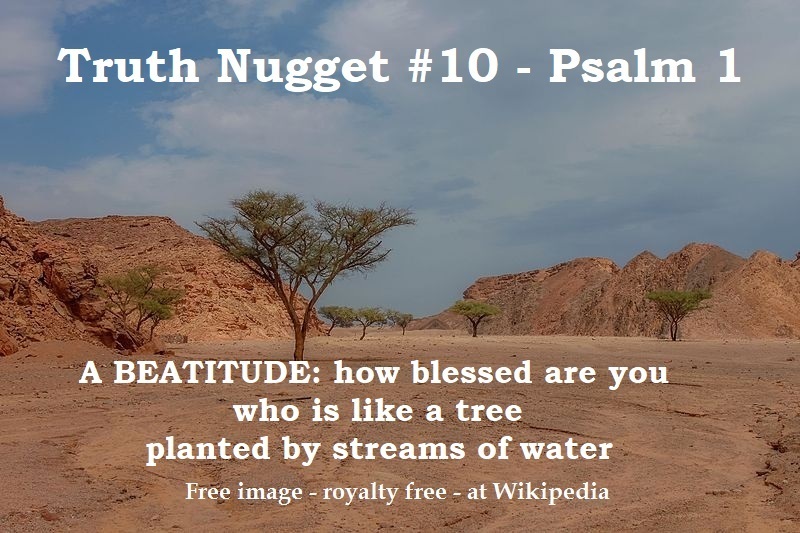
Jesus is said to have taught the Beatitudes in Matthew 5. It is as if we think Jesus invented the beatitudes and a grammatical form to teach us about what a real disciple is like. Well, he did not. David used the format and so did other writers of the psalms. Solomon uses it also in Proverbs. Psalm 1 is a beatitude. It is a picture of what a righteous man or woman is like who is one of God's people, one saved and part of the everlasting Kingdom of the Most High. Such a one is like a tree planted by streams of water. Once again, David gets it. Adonai inspired David to probably associate a righteous disciple of Yeshua with a particular tree found in the wadis of the Judean wilderness. So, you are like this tree. So come and join us in this podcast to understand what God says we are like even in days of difficulty and distress. We are not taken out of these difficult days but we live in them and through them to show the world what it is like to be HIS disciple, HIS righteous people.
Click here for my paper on the acacia tree - https://www.dropbox.com/s/z8p8guvg9r2lqol/The%20Acacia%20Tree%20.pdf?dl=0
Rev. Ferret - who is this guy? What's his background? Why should I listen to him? Check his background at this link - https://www.dropbox.com/s/ortnret3oxcicu4/BackgrndTeacher%20mar%2025%202020.pdf?dl=0
Oct 15, 2026
Oct 15, 2026
35 min
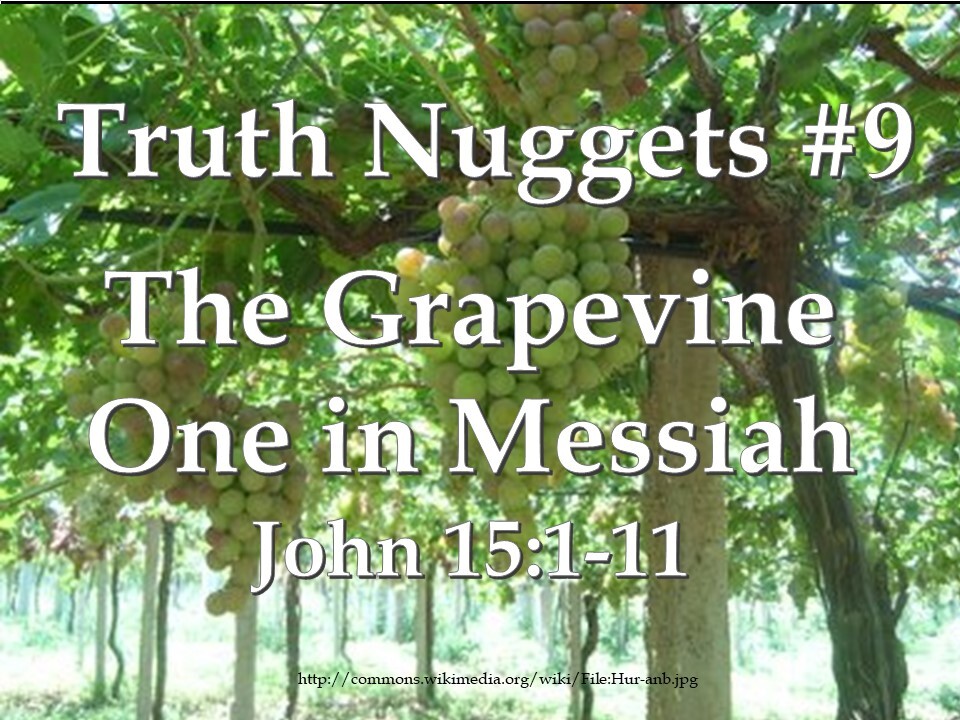
Jesus teaches His disciples that they are the BRANCHES and He is the TRUE VINE. On top of that these branches are "clean" because of what they learned from their rabbi, Rabbi Jesus. Clean? You mean somehow Jesus' words gave them a bath? Huh?
He was teaching Jews in Israel about 2000 years ago. We are so disconnected from those days that much of what Jesus taught simply escapes us. So, if you thought you understood everything in John 15:1-11 wait till you watch this vidcast! The church has abandoned understanding the Bible in its ancient historical and cultural context. There are so many misconceptions that we are taught mistakenly and without the knowledge of the teacher. It is time once again to reconnect to those days and study His word in context and grasp the original intended meaning by the Lord. Ready? Let's go.
Rev. Ferret - who is this guy?
 (Ferret ... taking a break in Jerusalem)
What's his background? Why should I listen to him? Check his background at this link - https://www.dropbox.com/s/ortnret3oxcicu4/BackgrndTeacher%20mar%2025%202020.pdf?dl=0