34.6K
Downloads
407
Episodes
The study of the Bible in its historical context - with a focus on the archaeology, history, geography, customs , culture, and even the languages of the ancient Middle East. WE ask what did they understand THEN - the original intent of the Lord - so that we can expand and enrich our understanding NOW and thus become true disciples of Adonai Yeshua as in John 8:31-32.
Episodes
20 minutes ago
20 minutes ago
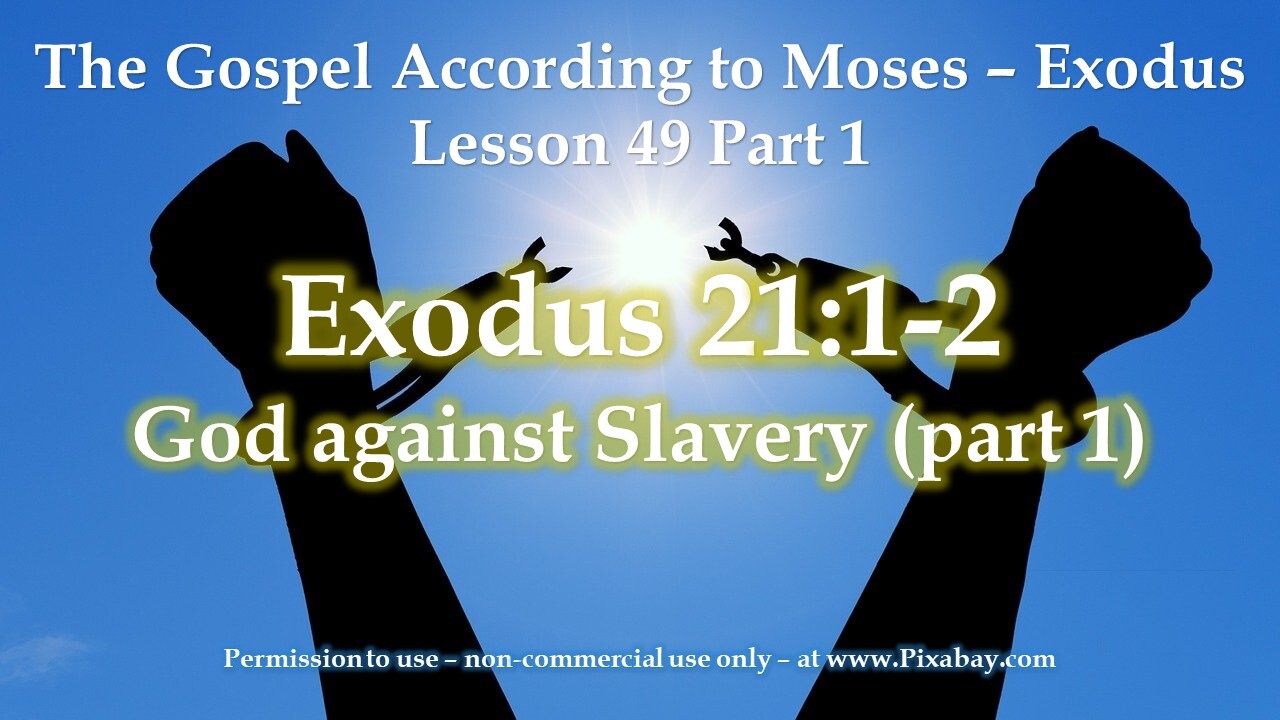
LESSON 49 PART 1
GOD AGAINST SLAVERY
I mentioned in the audio lesson about a number of links I’d provide that will enhance and add to your study. These links are shown below.
Article reviewing slavery in the USA leading to the Civil War - Library of Congress
https://www.loc.gov/classroom-materials/immigration/african/journey-in-chains/
Article reviewing slavery in the USA leading to the Civil War - History Channel
https://www.history.com/topics/black-history/slavery
Article reviewing slavery in the USA leading to the Civil War - American Heritage
https://www.americanheritage.com/stolen-slavery
Article on child trafficking - Save the Children
https://www.savethechildren.org/us/charity-stories/child-trafficking-myths-vs-facts
STATE DEPARTMENT OF USA – Child Trafficking
https://www.state.gov/humantrafficking-about-human-trafficking/
Definition of Slavery - BBC News
https://www.bbc.co.uk/religion/religions/islam/history/slavery_1.shtml
ARTICLE ON DISCIPLESHIP IN JESUS’ DAY - Research Gate
ARTICLE ON SLAVERY IN ISRAEL OF A NON-HEBREW - Hebraic Thought
https://hebraicthought.org/examining-ancient-israelite-slave-law-leviticus/
ARTICLE ON FREE WILL – WE’RE NOT SLAVES - Got Questions
https://www.gotquestions.org/free-will.html
ENCYCLOPEDIA BRTANNICA – what is slavery
https://www.britannica.com/topic/slavery-sociology
Rev. Ferret - who is this guy? What's his background? Why should I listen to him? Check his background at this link - https://www.dropbox.com/s/ortnret3oxcicu4/BackgrndTeacher%20mar%2025%202020.pdf?dl=0
2 days ago
2 days ago
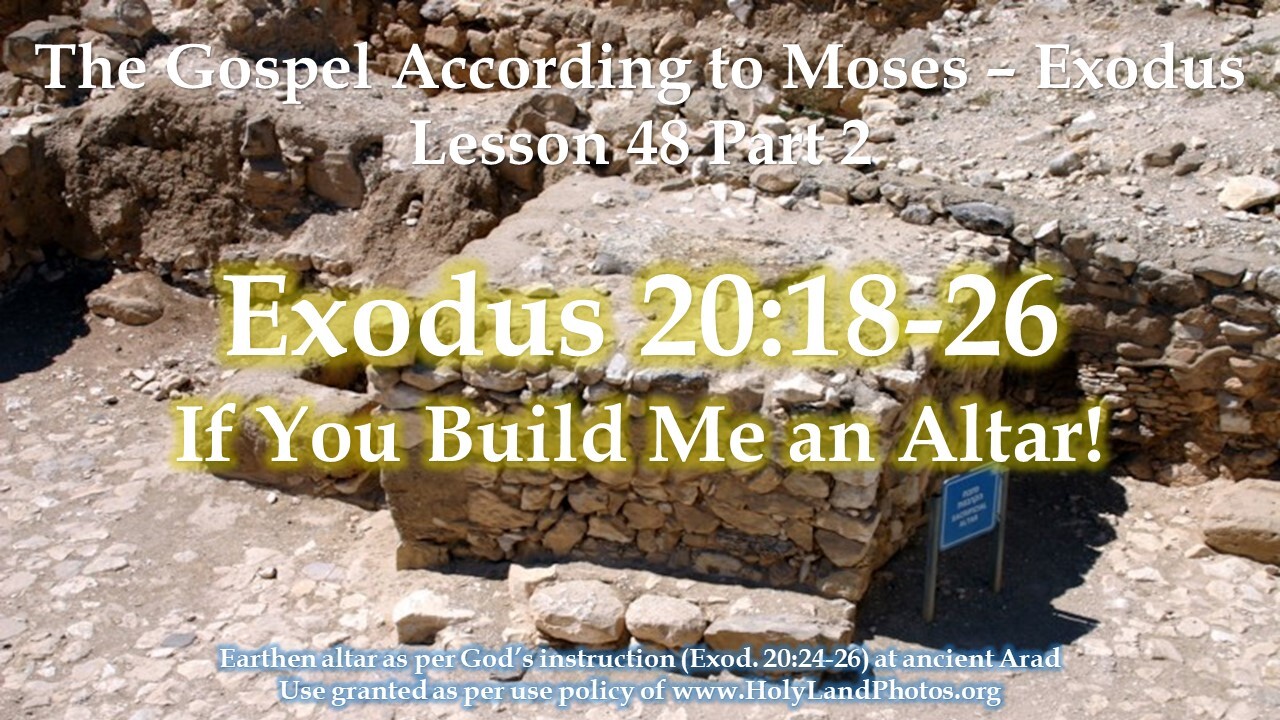
LESSON 48 PART 2
In part 2 of lesson 48 we learn that the Lord implies to all Israel that they need to be in His word; they need to remember His awesomeness, His power, His absolute greatness, and that He is God and God alone, the only God who does and will judge and punish sin. He suggests this by saying His people need to remember what the Lord showed them and what they SAW at Sinai. God said this was to prove Himself so that Israel would remember and thus be prevented from sin and turning from the Lord.
So, for us, this seems to suggest we need to emphasize His written word. We too need to remember His awesomeness, His power, His absolute greatness, and that He is God and God alone, the only God who does and will judge and punish sin. We need His written word to shows us the goal, the target, the whole purpose of His written word, and that is JESUS!
But, you are not going to understand this if you just read the Bible. There is a Bible you can buy called the ONE YEAR BIBLE. Link to the One Year Bible - https://www.amazon.com/One-Year-Bible-NLT/dp/1414302045 and here's a link to the website where you can simply download the reading plan and use your own Bible - https://oneyearbibleonline.com/?version=51&startmmdd=0101 The reading schedule gives you scriptures to read daily. If you follow the schedule you will read the entire Bible in one year. This is an awesome tool.
But, just reading the Bible will NOT answer the big questions. In the Bible there is NO scripture that says Jesus is God. You will not find it anywhere. Also, since all they had was the Hebrew Scriptures in Jesus' day, the Old Testament, one asks what is the GOSPEL? What is the good news? By reading the Bible only, again which is a very good thing, it will not give you the deeper and more expanded idea of what the gospel really is.
It is like asking where in the Bible does is say abortion is a sin? It doesn't! No where. But it does!! God said this ...
"When the LORD your God cuts off before you the nations which you are going in to dispossess, and you dispossess them and dwell in their land, beware that you are not ensnared to follow them, after they are destroyed before you, and that you do not inquire after their gods, saying, 'How do these nations serve their gods, that I also may do likewise?' "You shall not behave thus toward the LORD your God, for every abominable act which the LORD hates they have done for their gods; for they even burn their sons and daughters in the fire to their gods. "Whatever I command you, you shall be careful to do; you shall not add to nor take away from it.
(Deu 12:29-32)
God said don't do what the pagans do! What did the pagans do? They practiced sex outside of marriage. It was part of their temple rituals to their gods. God said don't do what they do. So, God just condemned pre-marital sex! Also, the pagans practiced abortion. Yes, many pagan nations did child sacrifice but I am specifically talking about abortion. The Ancient Greeks said abortion was legal. Rome as well. And an ancient Egyptian papyrus was found dated to the 15th century B.C., at least 100 years before the Exodus, which was a medical book. In that medical book it specified specific techniques for abortion. Imagine, the Hebrews were in Egypt for all those years in a culture that practiced abortion. And, what did God say? He said don't do what these pagans do. They did abortion. So, God is saying abortion is a major sin, an abomination. You'll only get this from Bible study and not just reading the Bible. We need both. But you can't have one without the other.
Here are two links to read about that Egyptian papyrus and that Egypt did practice abortion prior to Moses' day.
Link 1 - https://muvs.org/en/topics/termination-of-pregnancy/abortion-in-antiquity-en/
Link 2 - https://ancientegyptianfacts.com/ancient-egypt-abortion.html#google_vignette
Everyone in those days had gods and rituals and temples and a worldview. Pagan religion had altars to sacrifice to their gods. The Lord, Adonai (His name is יהוה probably pronounced YAH VAY not YAH WAY since there is no "W" sound in Hebrew) probably knew that His people would want to also use altars as part of their praise and thanksgiving to Adonai. So, the Lord gives specific directions on ho altars to be used for Him are to be built. Amazingly archaeology gives us insights into why the Lord gave these detailed specific instructions. Once again it has to do with all the pagan nations around the Hebrews. Once again God is saying DON'T BE LIKE THEM and separate yourselves from them and what they do. God's instructions for altars separates His people from the ancient pagans. But, that is for us as well. Paul is only being a good Torah teacher when he wrote ...
Therefore be imitators of God, as beloved children; and walk in love, just as Christ also loved you and gave Himself up for us, an offering and a sacrifice to God as a fragrant aroma. But immorality or any impurity or greed must not even be named among you, as is proper among saints; and there must be no filthiness and silly talk, or coarse jesting, which are not fitting, but rather giving of thanks. For this you know with certainty, that no immoral or impure person or covetous man, who is an idolater, has an inheritance in the kingdom of Christ and God. Let no one deceive you with empty words, for because of these things the wrath of God comes upon the sons of disobedience. Therefore do not be partakers with them; (Eph 5:1-7)
Just as the Lord instructed His chosen so does the Lord instruct us, His chosen in Yeshua, in Messiah, in Christ, not to do what the pagans do. It is right there in front of us. And you do not learn this by simply reading the Bible. Study. Study. Study. May His word be absorbed by you BODY and MIND and SPIRIT since God's word is His bread of life as we read in Deut. 8:3.
Rev. Ferret - who is this guy?
 (Ferret - somewhere on the Nile near Luxor)
What's his background? Why should I listen to him? Check his background at this link - https://www.dropbox.com/s/ortnret3oxcicu4/BackgrndTeacher%20mar%2025%202020.pdf?dl=0
3 days ago
3 days ago
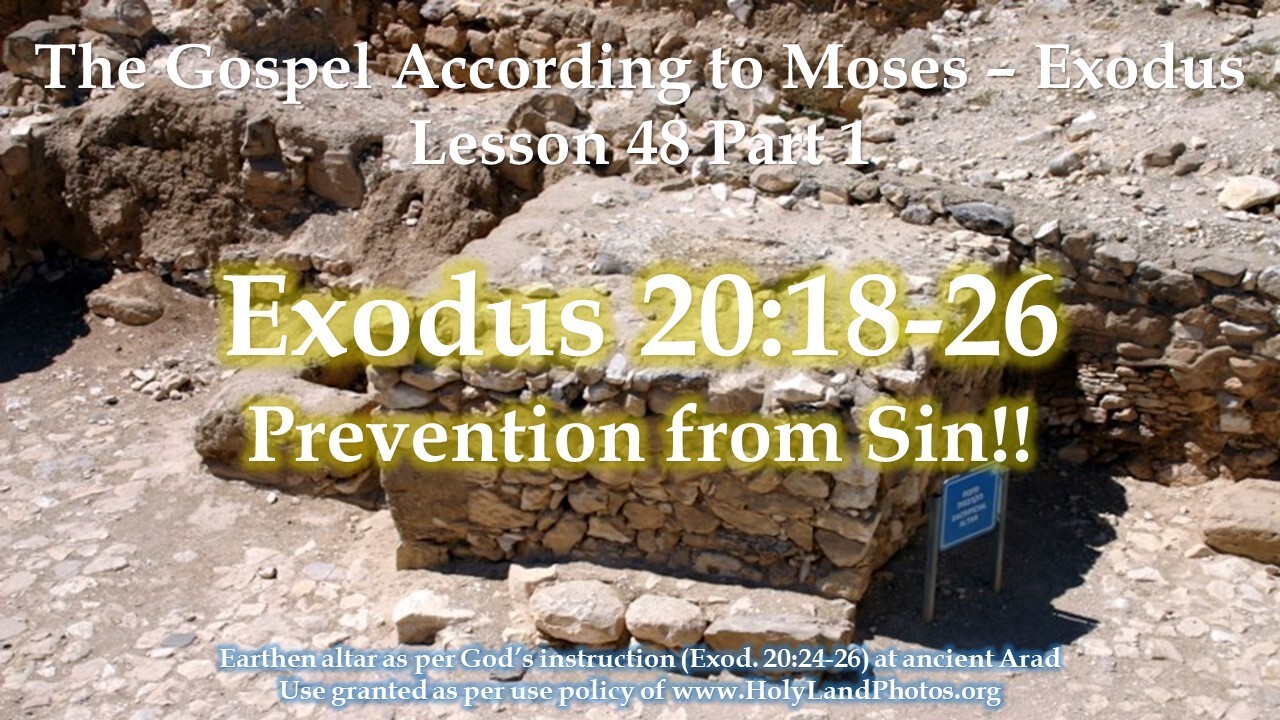
Lesson 48 Part 1
Adonai, the Lord, His name is probably pronounced Yahvay (there is NO "W" sound in Hebrew), has just completed giving the words of His Covenant (see Exod. 34:28) in Hebrew עֲשֶׂרֶת הַדְּבָרִים Aseret HaDevarim or the Ten Statements or Words. We know them as the Ten Commandments (NOTE: the phrase the Ten Commandments is not in the Bible only עֲשֶׂרֶת הַדְּבָרִים Aseret HaDevarim). It was an amazing event but the Lord now makes known to all of us that this event was beyond amazing, beyond miraculous. It was incomprehensible. It was beyond understanding. There is more to this event at Mt. Sinai than we imagined. I t had to do to what they saw the day God came to give them the words of the covenant. What did they see?
More than that God shows us that the giving of the Ten Commandments is tied to His feast we read about in Acts 2. It seems related to what the Hebrews SAW when God gave them the Ten Commandments. In Acts 2 all the religious Jews, the Gentile converts to Judaism called proselytes, and other Gentiles who believed in the Jewish God and were called God Fearers, were celebrating God’s “appointed time” of Shavuot or the Feast of Weeks. In Greek it is named Pentecost. It is so awesome to see that the words God inspired Moses to write in Exod. 20:18-26 and the words God inspired Luke to write in Acts 2 suggest a connection between Sinai and Jerusalem. We missed of course since few of us have had Bible studies that focus on the Jewish culture in 1446 B.C., in 30 A.D. or studies that help us understand the Greek and the Hebrew. But, the good news is that the Lord will not let this continue. Today He is moving to bring us tools and teachers to take us deeper into His word.
In this lesson I mentioned a number of articles that sadly discuss that many Christian churches today neglect to teach the word of God. It is one this to read the Bible but quite another to understand it. An example is you read the Bible and you believe that Jesus is God. OK, the Bible never uses the phrase, “Jesus is God” or Jesus never says “I am God.” OK, so you read the Bible. Big deal. You now need a teacher to help get at how the Bible shows that Jesus is God. So, one just can’t read the Bible. It needs to be taught. Both are critical for all Christians. And yet, many churches have given up on teaching the Bible. Check out the superb articles at the links below.
https://www.gotquestions.org/purpose-church.html
https://albertmohler.com/2014/05/14/why-so-many-churches-hear-so-little-of-the-bible
https://billmuehlenberg.com/2015/02/17/whatever-happened-to-teaching-in-the-churches/
https://versebyverseministry.org/bible-answers/my-church-doesnt-teach-the-bible
Rev. Ferret - who is this guy?

(Ferret - at the ancient temple built by Herod to honr Augustus Caesar in Omrit Israel)
What's his background? Why should I listen to him? Check his background at this link - https://www.dropbox.com/s/ortnret3oxcicu4/BackgrndTeacher%20mar%2025%202020.pdf?dl=0
4 days ago
4 days ago
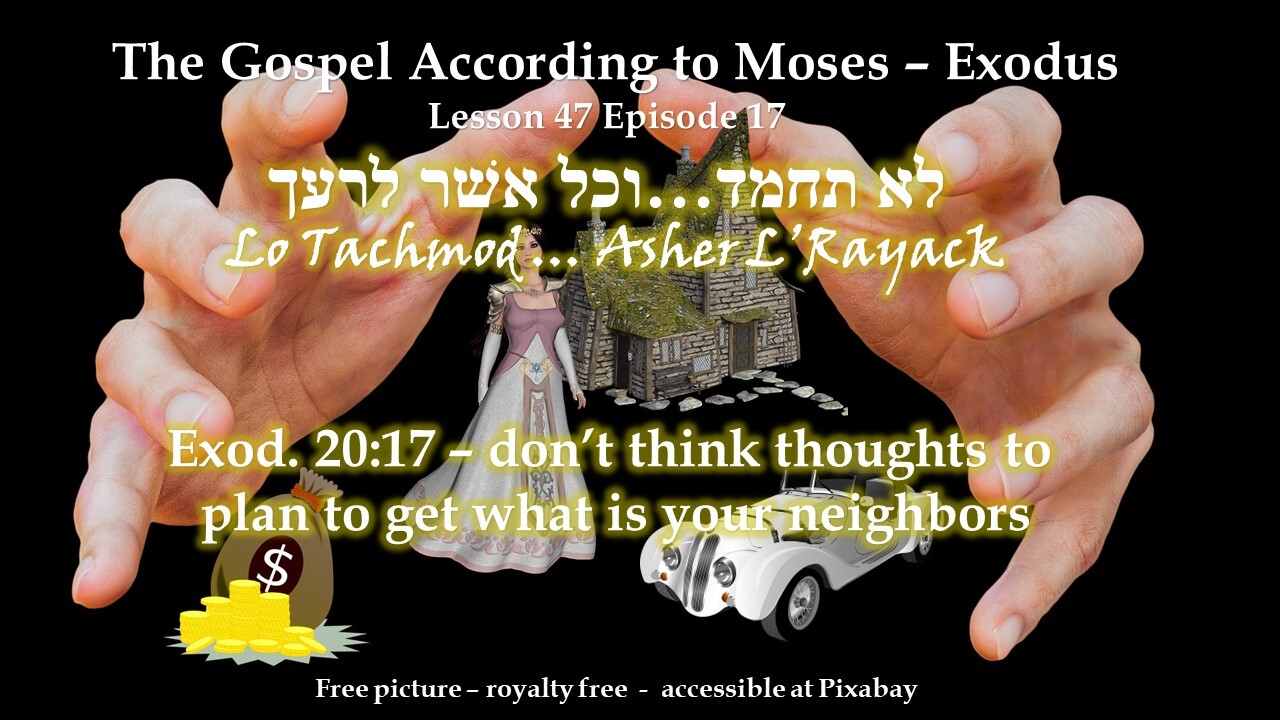
We now focus on the 10th Commandment …
"You shall not covet your neighbor's house; you shall not covet your neighbor's wife or his male servant or his female servant or his ox or his donkey or anything that belongs to your neighbor." (Exo 20:17)
Some say “covet” is the same as lust or craving or desire. It can’t be since there is no law against craving, desire, or lust. In this podcast Bible study we will find that COVET (the Hebrew is תחמד or Tachmod) is an obsessive mental focus on getting by whatever means something that belongs to one’s neighbor. COVET or coveting is “forbidden thought” that if followed through results in an evil action. There are two operatives here – thought and action. When you take this definition it is seemingly the cause for murder, committing adultery, stealing and lying. Jesus seems to teach this when He said …
"For out of the heart come evil thoughts, murders, adulteries, fornications, thefts, false witness, slanders. "These are the things which defile the man; but to eat with unwashed hands does not defile the man." (Mat 15:19-20)
In Jesus’ day the word “heart” was used as a picture to represent the mind. Jesus is saying our mind gives rise to “evil thoughts” and this seems to connect to COVET as an obsessive mental focus on getting by whatever means what we are craving or lusting.
I ended this session on the Ten Commandments by suggesting you watch the 5-minute Bible study video episode 9 in the series, “Five Small Stones.” It is entitled “It Is Finished.” This video is a teaching about the “missing piece” in the Sinai Covenant that is recognized by Jewish non-Christian scholars, the writer of the book of Hebrews, and Paul. The link to this video is …
https://lightofmenorah.podbean.com/e/five-small-stones-episode-9-rom-104-it-is-finished/
Rev. Ferret - who is this guy?
 (Ferret - Timnah Park north of Eilat Israel)
What's his background? Why should I listen to him? Check his background at this link -https://www.dropbox.com/s/ortnret3oxcicu4/BackgrndTeacher%20mar%2025%202020.pdf?dl=0
4 days ago
4 days ago
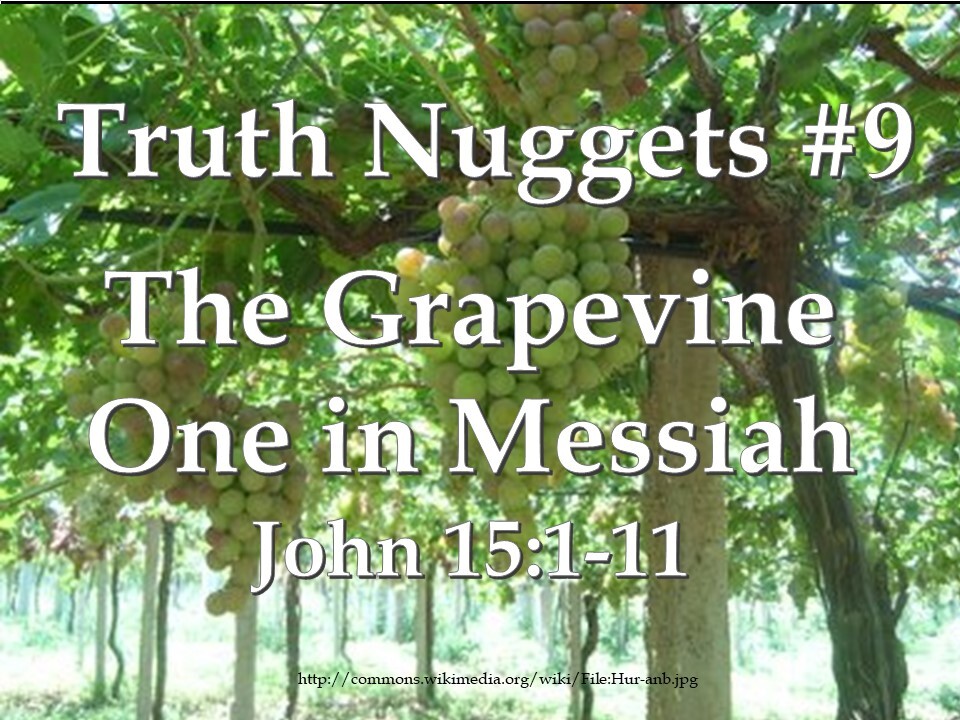
Jesus teaches His disciples that they are the BRANCHES and He is the TRUE VINE. On top of that these branches are "clean" because of what they learned from their rabbi, Rabbi Jesus. Clean? You mean somehow Jesus' words gave them a bath? Huh?
He was teaching Jews in Israel about 2000 years ago. We are so disconnected from those days that much of what Jesus taught simply escapes us. So, if you thought you understood everything in John 15:1-11 wait till you watch this vidcast! The church has abandoned understanding the Bible in its ancient historical and cultural context. There are so many misconceptions that we are taught mistakenly and without the knowledge of the teacher. It is time once again to reconnect to those days and study His word in context and grasp the original intended meaning by the Lord. Ready? Let's go.
Rev. Ferret - who is this guy?
 (Ferret ... taking a break in Jerusalem)
What's his background? Why should I listen to him? Check his background at this link - https://www.dropbox.com/s/ortnret3oxcicu4/BackgrndTeacher%20mar%2025%202020.pdf?dl=0
6 days ago
6 days ago
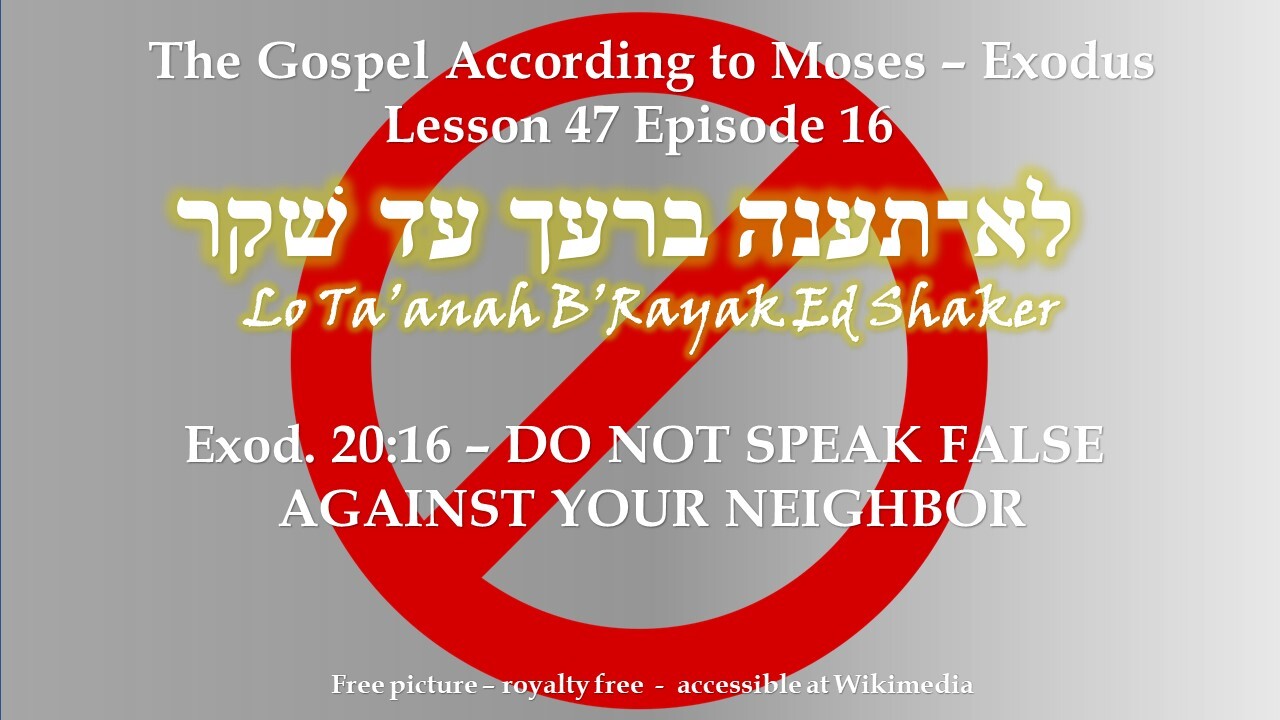
Is it always a sin to lie? Is there such a thing as "white lies?" Maybe the Lord only meant in the 9th Commandment not to lie as a witness in a court of law. And I can't be a false witness to my neighbor. Who is my neighbor? Only people in my neighborhood?
Lots of questions come up on all the עשׂרת הדברים - Asereet HaDevareem - the ten statements of the Lord. Come and join us as we study the 9th commandment. We'll see that this commandment is the basis for a good and just society - probably what the Lord intended right from the "get go."
Rev. Ferret - who is this guy?
 (Ferret - leading a teaching tour to Israel. Standing at one of the temples Herod built to honor Augustus Caesar at Omrit Israel)
What's his background? Why should I listen to him? Check his background at this link - https://www.dropbox.com/s/ortnret3oxcicu4/BackgrndTeacher%20mar%2025%202020.pdf?dl=0
7 days ago
7 days ago
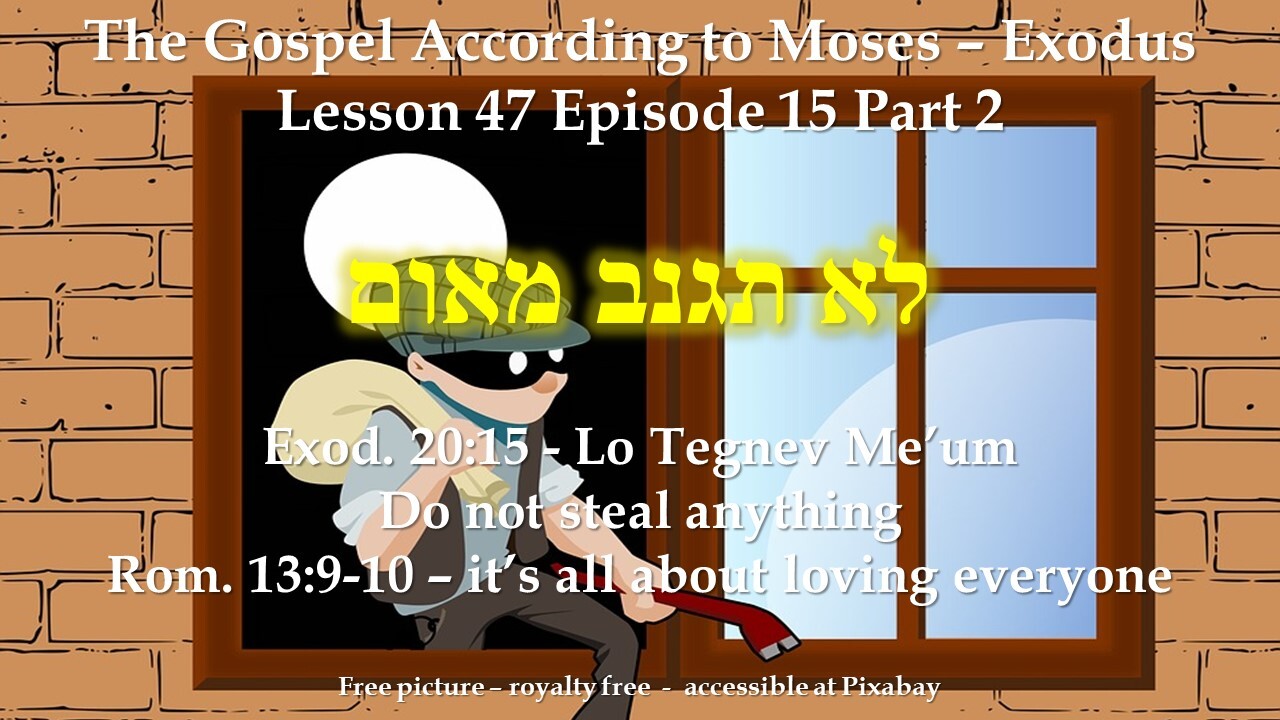
Lesson 47 Episode 15 Part 2
מאום תגנב לא
Exod. 20:15 - Lo Tegnev Me’um
Do not steal anything
Rev. Ferret - who is this guy?
 (Ferret - teaching on the shores of the Sea of Galilee)
What's his background? Why should I listen to him? Check his background at this link - https://www.dropbox.com/s/ortnret3oxcicu4/BackgrndTeacher%20mar%2025%202020.pdf?dl=0
Sunday Jun 07, 2026
Sunday Jun 07, 2026
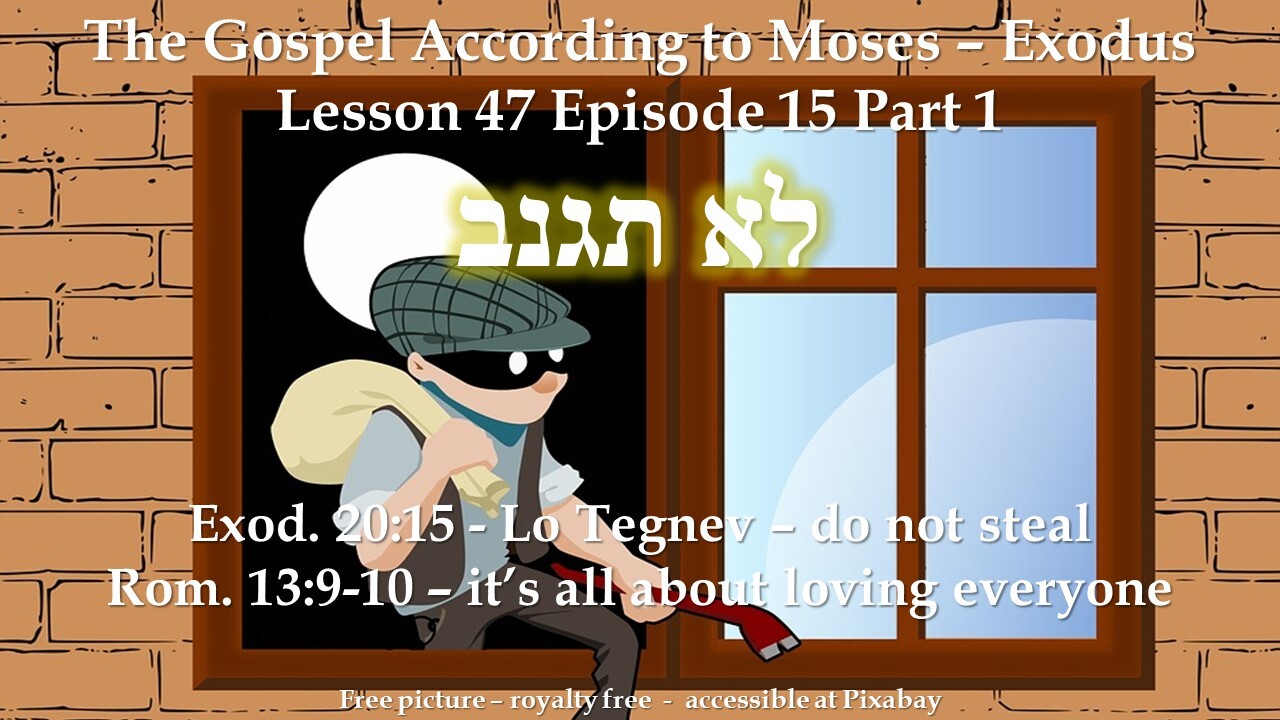
Lesson 47 Episode 15 Part 1 - no stealing!!
The 8th Commandment - Lo Tegenev - לא תגנב - No Stealing. But it doesn't specify what NOT to steal! God did this by design. Why? Join us in the next podcast on the Ten Commandments and let the Lord take us deeper into understanding His Covenant foundation.
Rev. Ferret - who is this guy?
 (Ferret - teaching in the ruins of Chorazin)
What's his background? Why should I listen to him? Check his background at this link - https://www.dropbox.com/s/ortnret3oxcicu4/BackgrndTeacher%20mar%2025%202020.pdf?dl=0
Saturday Jun 06, 2026
Saturday Jun 06, 2026

This is part 4 of episode 14 on the 7th Commandment - Exo 20:13 לא תרצח Lo Tenaf - NO ADULTERY. We focus on the question of where did God ever say that extra-marital sex is a sin? Is forbidden? What about abortion? In Jesus' day these are sins. But, it is not specified in the Torah. Check it out at this link ... https://www.jewishvirtuallibrary.org/premarital-sex
So, where is it in the Bible? These sins were part of the pagan cultures in the ancient Near East. It is interesting to note that God DID condemn these acts as sin and it is IN the Torah. Where? Come and join us as we see that the 7th Commandment is only for adultery and does NOT include all sexual immorality. But God does teach that extramarital sex, abortion, infanticide, pedophilia, etc. is what He hates, they are abominations, and are sins. It's there. How did we miss it? Once again it has to do with putting the Bible into its historical context.
Rev. Ferret - who is this guy?
(Ferret - teaching on the northen shore of the Sea of Galilee)
What's his background? Why should I listen to him? Check his background at this link - https://www.dropbox.com/s/ortnret3oxcicu4/BackgrndTeacher%20mar%2025%202020.pdf?dl=0
Friday Jun 05, 2026
Friday Jun 05, 2026
This episode provides a clear review of episodes 1 and 2. We see that in the Ancient Near East adultery was a serious crime and it wasn't primarily about the sex. If not about the sex outside of marriage, what's the serious nature of adultery back in the 15th century BC?
Secondly, no other pagan culture had their god or gods commanding that adultery was forbidden. It was a man made set of laws. But, for Israel, God, our God, the only God commands that adultery is forbidden and part of His covenant with His people. This means that Israel will be a testimony to the world of how to live according to the Lord.
Third, why is it that a married woman in an affair with a man not her husband will be executed and her lover? What about a married man in an affair with a woman not his wife? This is not fair. This is not equitable. What's going on?
Fourth, many Christian theologians say the 7th commandment is a commandment forbidding ALL sexual impurity. HUH? The Bible doesn't say that. On top of that God said not to add or subtract from His word. This is what many Christian theologians have. As an example, sex outside of marriage is a sin in Judaism and Christianity. But the Bible has no statement saying it is. What's going on? Where does the Lord teach that pre-marital sex, homosexuality, pedophilia, bestiality, and prostitution are sins? He does! But how? Where?
Rev. Ferret - who is this guy?
(Ferret - teaching in the ruins of Corazin Israel)
What's his background? Why should I listen to him? Check his background at this link - https://www.dropbox.com/s/ortnret3oxcicu4/BackgrndTeacher%20mar%2025%202020.pdf?dl=0